Extreme UV Index Alert (11+): Why Standard Lotions Fail in Pakistani Weather & The Science of Broad-Spectrum SPF 60
Dr. Farhan Siddiqui, Dermatologist & Photobiology Fellow
Chamkili Photobiology Research Group
Executive Clinical Brief
With ambient UV indices consistently touching extreme ratings across Sindh, Punjab, and Islamabad, photobiologists issue guidelines on avoiding solar elastosis, sun spots, and melasma. Discover why cosmetic moisturizers lack genuine photoprotection and what makes a PA+++ mineral-hybrid sunblock essential.
11+
Extreme UV Index Peak
98.3%
UVB Rays Blocked by SPF 60
PA+++
Maximum UVA Photoprotection Rating
The Deceptive Sun: UVA vs. UVB and South Asian Skin
Many people in Pakistan believe that if they are not getting sunburned, their skin is safe. This is a dangerous misconception. While UVB rays cause superficial burning, UVA rays penetrate deeply into the dermis regardless of cloud cover. In South Asian Fitzpatrick skin types III to V, intense UVA exposure stimulates melanosomes to overproduce pigment as a defense mechanism, leading to stubborn melasma, sun spots, and uneven tan that takes years to correct.
Over 80% of visible facial aging, loss of elasticity, and hyperpigmentation in Pakistan is directly caused by chronic unprotected UVA solar radiation, not chronological age.
Why Typical Cosmetic Lotions Cause Greasiness and Breakouts
The primary reason most Pakistani women and men avoid sunscreen is the unpleasant sensory experience: heavy formulations, suffocating greasiness in high humidity, and a ghostly chalky white cast. When low-grade thickeners are exposed to sweat, they melt into the eyes and clog pores, discouraging daily use.
The solution is not skipping sun protection, but using a modern micronized fluid emulsion that dries down matte, provides zero white cast, and doubles as an oil-controlling daily moisturizer.
The Clinical Standard: SPF 60 with High PA+++ Rating
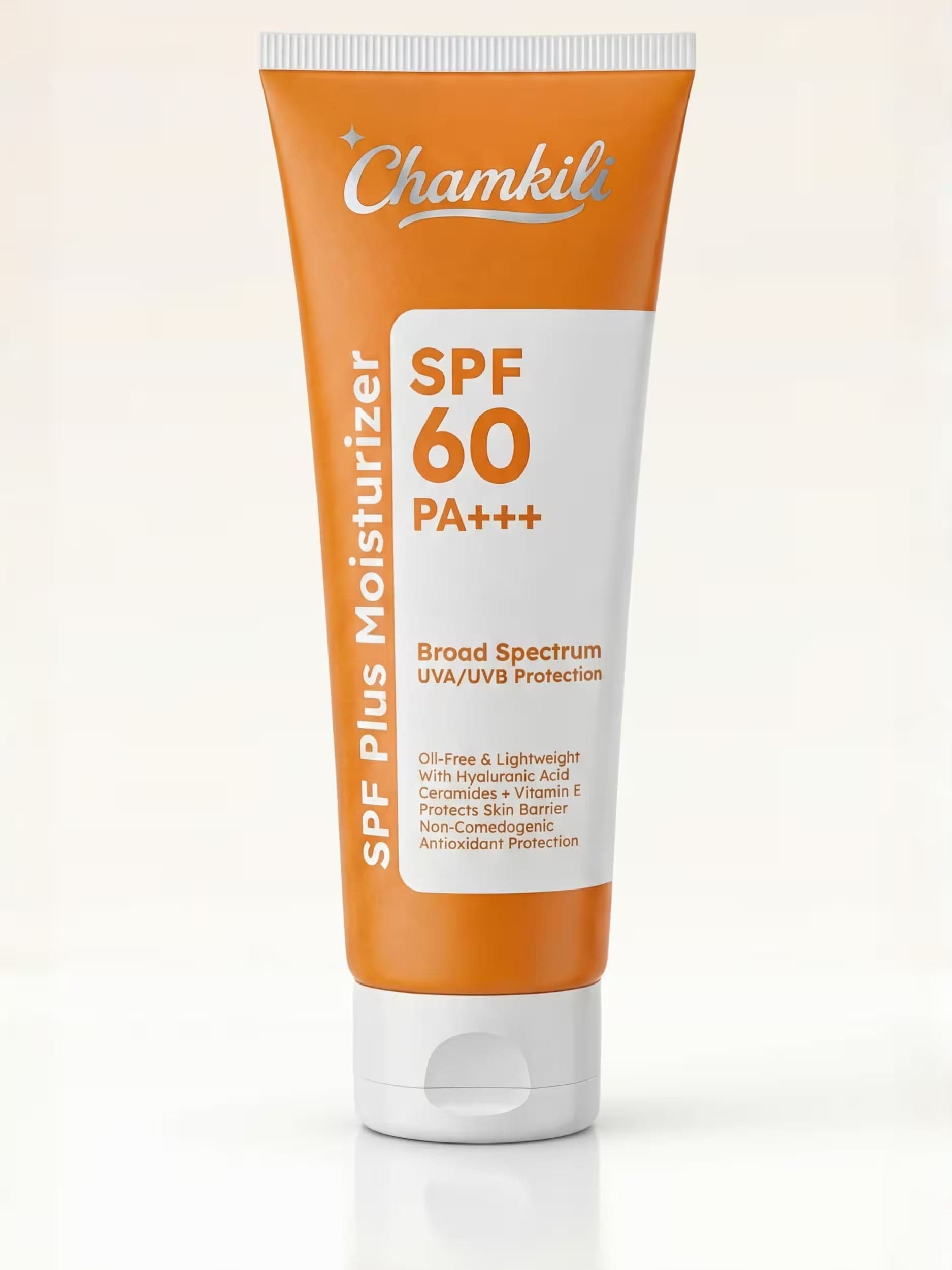
An SPF rating only measures protection against UVB (burning), whereas the PA rating (Protection Grade of UVA) measures defense against deep cellular pigmentation and premature wrinkling. In the subcontinent's high-intensity solar climate, a minimum of SPF 50+ to 60 with PA+++ is required to provide complete broad-spectrum shield for commuters, students, and professionals.
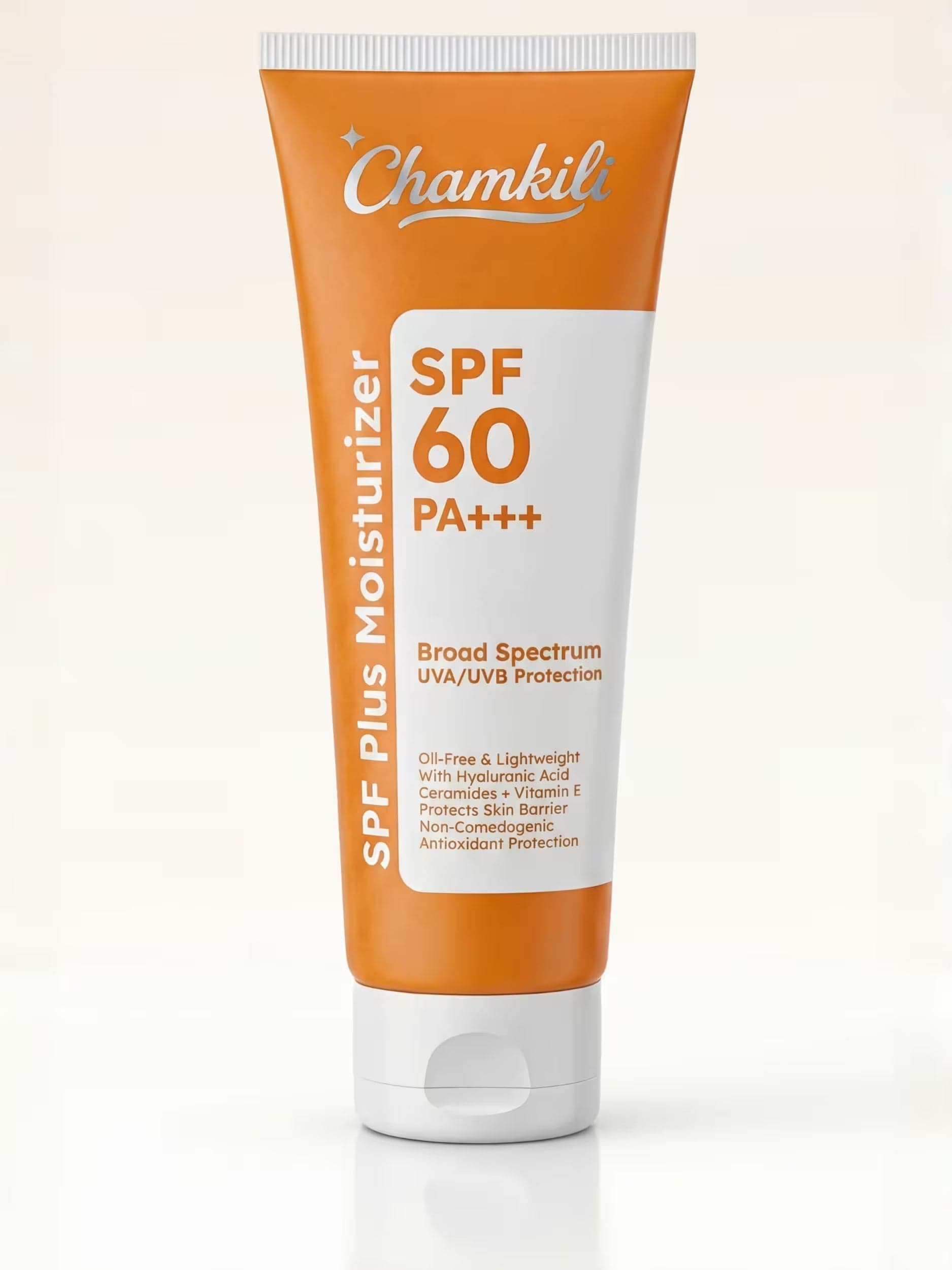
SPF 60 PA+++ Sunscreen Moisturizer
Formulated specifically for high-temperature South Asian climates, Chamkili Broad-Spectrum SPF 60 PA+++ Sunscreen Moisturizer offers maximum photoprotection with zero white cast, water resistance, and a breathable matte finish.
Dermatologist Clinical Recovery Protocol
Apply two finger-lengths of broad-spectrum SPF 60 every single morning, 15 minutes before stepping out. Reapply if outdoors for extended periods, and make sure your sunblock is non-comedogenic so it never triggers sweat breakouts.
Share This Public Advisory
Help friends & family protect their skin from harmful local chemicals